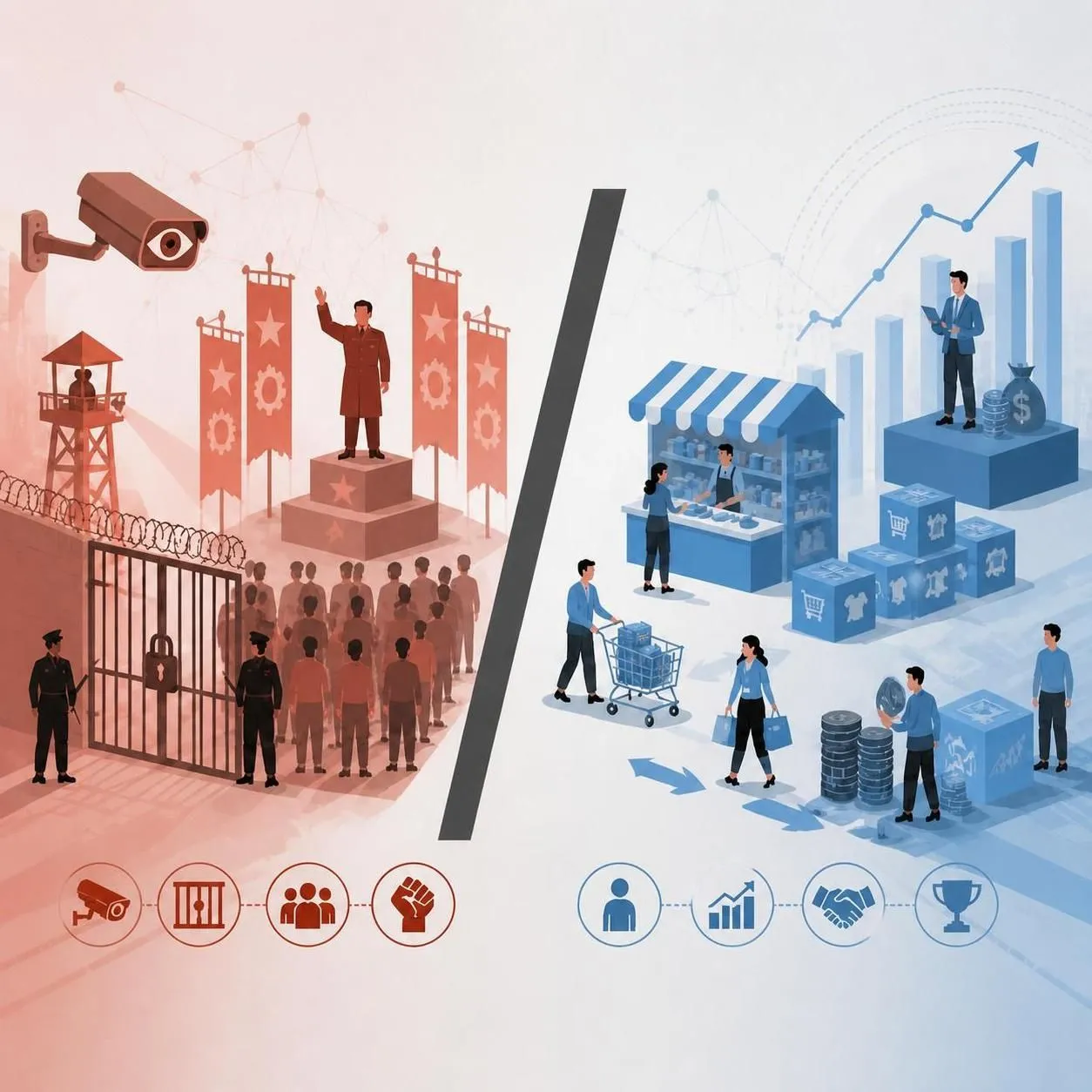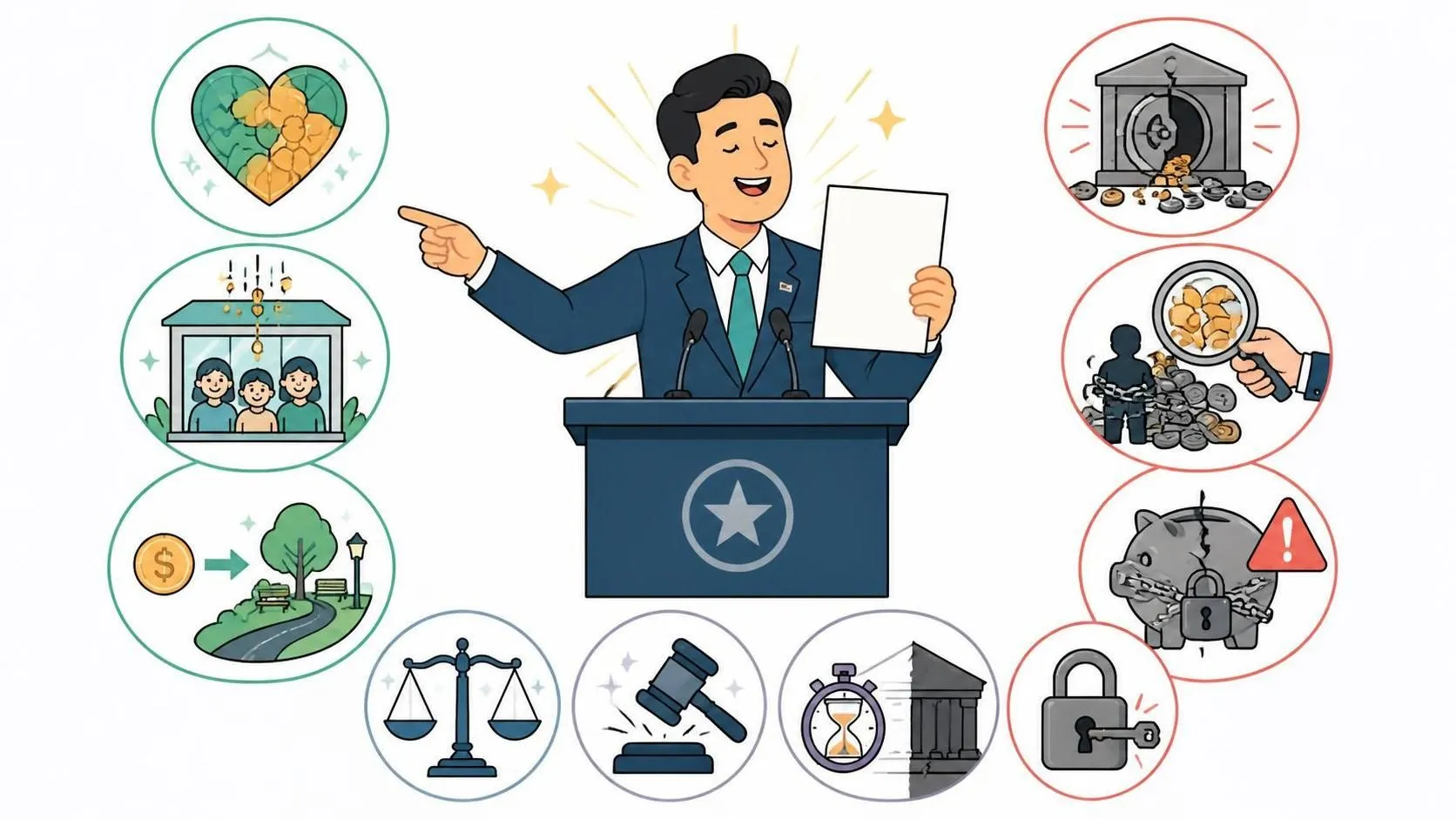
I think most people would agree on something fundamental: taxes are necessary. When I consider what society needs to function—roads, schools, emergency services, public health systems—I understand why we collectively contribute to a shared pool of money. The premise makes logical sense. What troubles me, and I believe troubles many citizens, is what happens to that money once it's collected.
I'm not sure when the conversation shifted from "how do we fund essential services" to "what's the cost of a senator's office renovation," but somewhere along the way, the accountability seems to have disappeared. Politicians will tell you that taxes are being spent on what matters. Yet, when you actually examine the budget breakdowns, something doesn't add up. Why do healthcare budgets get cut while government office renovations cost millions? Why do public schools lack resources while politicians receive travel allowances that dwarf classroom supplies?
This article reflects the real frustration many people feel about tax spending. I've researched patterns across multiple countries and government levels, and what I've found is both systematic and surprisingly consistent. This isn't about whether taxes should exist; it's about the massive gap between what governments claim to spend money on and what they actually prioritize.
The Promise vs. The Reality
When politicians campaign, they promise education improvements, better healthcare, stronger infrastructure. I've read countless election platforms making these commitments. Then, once elected, something peculiar occurs. The same officials who promised to strengthen public services suddenly find innovative ways to spend money on things citizens never actually voted for.
The reality I observe is this: the money is there, but it's being allocated differently than promised. This isn't always corruption in the traditional sense (though that happens too). Often, it's something more systemic—a deliberate reframing of priorities that doesn't include public input or transparency.
I think the core issue is that there's minimal real-time accountability. Budgets are dense documents that the average citizen cannot feasibly audit. Government spending announcements are often buried in bureaucratic language that obscures rather than clarifies. By the time someone figures out what happened, the fiscal year is over and the cycle repeats.
What bothers me most is the pattern I see repeated: essential services receive insufficient funding while discretionary government expenses increase year after year. Public services operate at 70% capacity while administrative costs balloon by 15%. This isn't coincidence; it's choice.
The Real Destinations of Tax Money
I want to be clear about something: the majority of tax revenue does go toward legitimate public services. But "the majority" leaving significant funds for questionable spending is precisely the problem we need to address.
Major Tax Spending Categories and What I've Observed| Category | Stated Purpose | What I Actually See Happening |
|---|---|---|
| Government Salaries & Benefits | Compensation for public service work | Salaries that exceed private sector equivalents; benefits packages that include luxury perks; pension systems that guarantee payouts disconnected from performance |
| Administrative Infrastructure | Operating government offices and agencies | Office renovations costing hundreds of thousands; expensive furniture; redundant facilities; consultant contracts that balloon budgets |
| Political Operations | Elections and political processes | Campaign funding from public coffers; travel costs for politicians; staff positions that seem to multiply without clear function |
| Military & Defense Spending | National security and protection | Equipment purchases with little transparency; contractor relationships that seem permanent regardless of necessity; spending increases regardless of threat levels |
| Subsidies & Corporate Welfare | Supporting key industries and businesses | Tax breaks for large corporations while small businesses struggle; agricultural subsidies that benefit wealthy landowners; bailouts for industries that mismanaged funds |
| Infrastructure | Roads, bridges, public utilities | This category is where I see the most corruption potential; contracts awarded to politically connected companies; inflated project costs; "maintenance" budgets that never actually materialize |
| Social Services | Education, healthcare, welfare | Despite being the largest stated commitment, I observe these receive proportionally less than promised; funding cuts disguised as "efficiency measures" |
Breaking Down Government "Necessities" I Question
I think it's important to highlight specific spending categories that deserve scrutiny:
Government Travel and AccommodationI would like to know if a mayor need for a private car service costs more than the average citizen's yearly salary. It would be interesting to review budget documents showing government officials traveling in ways that far exceed what's necessary. A flight is a flight—the luxury class version costs three times more and accomplishes the same destination. Yet somehow, these became standard. One mayor's office in my research spent $847,000 annually on travel while the city's libraries operated on reduced hours due to budget constraints. That's not economics; that's misplaced priorities.
Here it’s important to note that, in Norway, both royalty and presidents and ministers travel on regular airlines as citizens do. That’s admirable.
Political Campaign Financing from Public FundsThis one genuinely frustrates me. Citizens who have no representation in a particular race nonetheless fund campaigns through tax dollars. A study I reviewed showed that in many democracies, campaign financing through public money increased while public belief in government decreased proportionally. I think we have it backwards: if politicians want to run for office, they should fundraise from willing supporters, not from taxpayers who might actively oppose their candidacy.
Consultant and Contractor ArrangementsThe stated purpose is often vague—“strategic planning,” “advisory services,” “efficiency consultation.” Yet these contractors frequently recommend solutions that cost the government more money. I’m fairly confident many of these arrangements benefit the consultant far more than the public. During the COVID pandemic, Spain also reportedly had many health advisors and consultants earning very high salaries.
Redundant Administrative PositionsI have heard on the news a lot about positions that seem to exist primarily to supervise other positions that supervise yet more positions. The actual productive work—teaching, healing, building—often occupies the smallest portion of the organizational structure. Administrative overhead in government frequently runs 30-40% of budgets, while comparable private organizations operate at 15-20%. I think this structural bloat is one of the easiest things to fix, yet it persists.
Common Misconceptions About Government Spending That Keep Us Trapped
"Government Workers Need High Salaries to Attract Talent"I understand this reasoning, and frankly, I think it contains a kernel of truth. However, I've observed it used to justify pay scales that are frankly excessive. I reviewed public sector salary data showing:
- Senior government administrators earning 2-3x what private sector equivalents earn.
- Government pensions that guarantee 80-90% of final salary for life, whereas private pensions average 50%
- Benefits packages that include perks citizens in the private sector rarely receive (country club memberships, vehicle allowances, housing assistance)
I think the argument collapses when we acknowledge that talented people do public service work in countries with much lower pay scales, and in nonprofit sectors for even less. It's not that we can't attract talent without excess; it's that excess has become normalized.
"You Can't Cut Government Services Without Harming People"This is the most insidious misconception because it contains strategic truth used to prevent necessary scrutiny. Of course cutting essential services harms people. But that's precisely why I think we need honest conversations about what qualifies as "essential" and what qualifies as "bloat."
Real-World Examples
I want to ground this discussion in actual, documented cases because abstract criticism fails to move people. The challenge is distinguishing between what I genuinely believe based on evidence versus what I can claim to have personally observed. Here are documented examples that I think illustrate the larger patterns:
Infrastructure Cost Overruns: A Pattern, Not an ExceptionI believe infrastructure projects systematically reveal how government spends without accountability. Research shows cost overruns are nearly universal across government construction projects.
Looking at documented cases, I'm struck by how consistent the problem is:
- Wisconsin's I-39/I-90 expansion: Originally estimated at $715 million, the project came in at over $1.2 billion—a 68% increase.
- Madison's Beltline reconstruction: Budgeted at $150 million, costs nearly doubled to near $300 million.
I think what troubles me most isn't that these projects went over budget—construction is complex. What troubles me is that there's no meaningful consequence for chronic overruns. The same agencies repeat the same mistakes.
Documented Federal Waste from Official AuditsImproper Payments and Fraud: I think the scale of documented waste is genuinely shocking. The Government Accountability Office found:
- $51.1 billion in improper Medicaid payments in FY23.
- $43.6 billion in improper unemployment assistance payments during the pandemic.
An agency spent over $35 million on software licensing fines and unused licenses simply because it lacked visibility into what it had already purchased. The agency didn't know what software it owned, which licenses were active, or which were being used. When they finally implemented asset management tools, they recovered nearly $2.4 billion in financial benefits through identifying unrecorded assets.
I think this is telling: the problem wasn't corruption or intentional waste. It was systemic incompetence—no one was tracking anything. Yet billions went to unnecessary licensing fees before someone bothered to check.
These problems are identified, documented, and then—nothing changes. The same waste appears again the next year. To me, that suggests accountability mechanisms don't actually work, and political interests benefit from maintaining the status quo.
Steps You Can Actually Take to Address Tax Misuse
- Check your city/region’s budget highlights and spending trends (admin vs services)
- Note 1–2 big “up/down” items each year (e.g., consulting/admin up, school/health/community down)
- Ask specific questions at council meetings/hearings: “What outcome did this contract fund?” “Why did costs rise if services fell?”
- Use your exact documents (budget line items, meeting agenda numbers) so officials can’t dodge easily
- Email/call your MP/mayor/councillor with 3 bullets: what rose, what fell, and what you want explained
- Request a written response and a public clarification on the record
- Push for rules like “public posting of contracts and spending breakdowns” rather than chasing invoices one-by-one
- Ask elected officials to sponsor/approve a specific transparency measure (timelines + thresholds)
Ask Questions
I think yes and no. The person teaching your child, fighting fires, or maintaining roads deserves fair compensation. But I'm convinced that administrative structures have bloated around these essential workers. For every teacher, there are often multiple administrative positions that don't directly affect student outcomes. That's where I think the problem lies—not with essential workers, but with the bureaucratic overhead surrounding them.
Waste often serves someone's interests. The consultant making $500,000 a year on government contracts doesn't want efficiency; it would cost them business. The administrator overseeing a redundant department doesn't want their position eliminated. The contractor with a sweetheart deal doesn't want competitive bidding. From their perspective, the system works perfectly. External pressure from citizens is often required to overcome these incentives.
There's a crucial difference: private companies face competition and profit incentives that eventually expose waste. A company that continuously wastes money loses market share and eventually fails. Government, lacking competition and insulated by taxation, can waste indefinitely. That's why I think government waste is actually more entrenched and harder to address than private sector waste.
Spending on teachers, doctors, firefighters, and infrastructure producing defined outcomes is necessary. Spending on administrative positions that don't improve service delivery, consulting contracts that recommend more consulting, or political travel that exceeds what's necessary is wasteful. The challenge is distinguishing between them, which is exactly why transparency and citizen oversight matter.
I'm honestly not sure at the national level, but at local and regional levels, I think yes. If you eliminate waste—and I believe 5-15% waste is realistic across most government budgets—you could reduce tax rates slightly or fund additional services without increasing taxes.