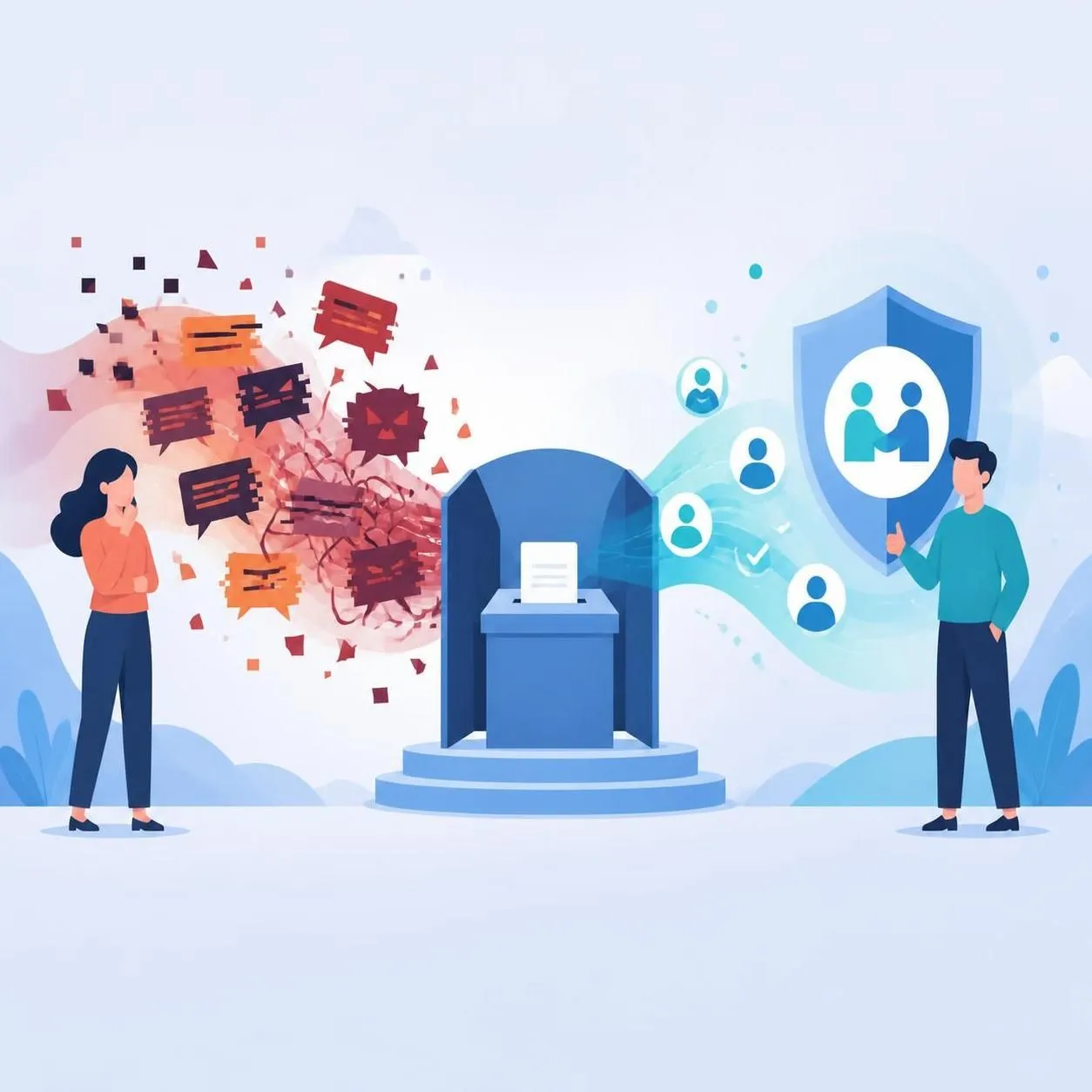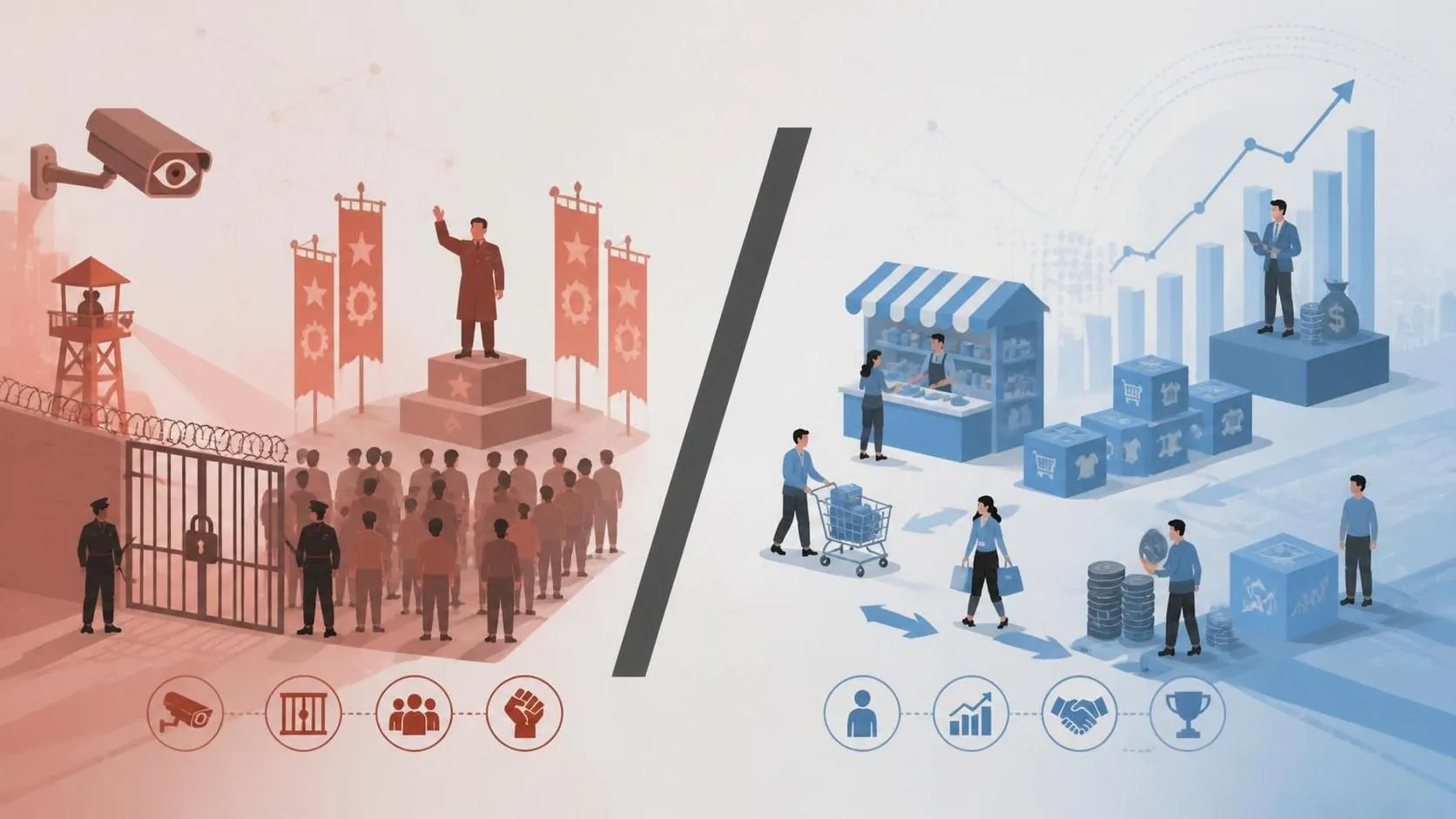
When we talk about communism versus capitalism, we're not just discussing economic theories from textbooks. We're talking about how entire nations are organized, who has power, and what happens to ordinary people living under each system. Think of it like comparing two different recipes for running a country—one emphasizes central control and equality, the other relies on markets and individual incentive. Both promise prosperity. Both have failed in different ways. But they don't fail equally.
The essential difference is this: capitalism distributes power through markets and individual choice, while communism concentrates power in the hands of the state. This single fact shapes everything that follows—from what you can say freely to whether you can start a business, to whether your government will be honest about a famine killing millions of people.
What Capitalism Actually Is
Capitalism is an economic system where most property is owned by private individuals and businesses, not the state. People compete, buy, sell, and make their own economic choices. The government still exists—it sets rules, collects taxes, and (ideally) protects people's rights—but it doesn't try to control every aspect of economic life.
The obvious problems:- Inequality. Capitalism creates winners and losers. Some people become wealthy while others struggle. A child born to poor parents faces steeper odds than one born rich. This is genuinely unfair.
- Corporate power: Large companies can influence governments, lobby for favorable laws, and sometimes prioritize profits over worker safety or environmental protection.
- Boom and bust cycles: Markets can crash, causing unemployment and poverty. The 2008 financial crisis showed how reckless capitalism can hurt millions of ordinary people.
- Exploitation risks: Without strong regulation, companies may pay workers poverty wages or create dangerous working conditions.
- Not everyone has equal opportunity: Education, healthcare, and networks are often better for the wealthy.
These are real criticisms. Any honest person acknowledging capitalism must admit: it does not guarantee a good life for everyone.
So Why Does Capitalism Still Produce Better Outcomes?
Here's where capitalism's strongest point emerges: it produces the most prosperity broadly, and it's connected to democracy.
Think of it this way—imagine a pie. Capitalism may not divide the pie equally, but it tends to make the pie bigger. More people live better lives under capitalism than under communism, even if wealth distribution is unequal. Poor people in capitalist countries typically have higher living standards than poor people in communist countries.
Consider basic facts:
- Innovation happens faster: People competing for profit invest in new technologies, medicines, and improvements. Capitalist countries developed smartphones, vaccines, and renewable energy faster than centrally-planned economies ever did.
- Consumer choice: You can buy what you want, work where you choose, and move where you prefer. These freedoms matter enormously for human dignity.
- Economic feedback loops work: If a business produces garbage products or treats workers badly, customers can go elsewhere. Competition creates incentives for quality and fair treatment. Yes, this requires regulation—but it works better than hoping a central government cares about quality.
- Capitalism correlates strongly with democracy: Countries with capitalist economies are far more likely to have free elections, free speech, and independent courts than communist states. This is not coincidence. When people control economic resources, they resist totalitarian control.
Understanding Communism (And Why It Failed Catastrophically)
The Communist PromiseCommunism promised something beautiful: a world without class divisions, where all property is shared, and everyone contributes according to ability and receives according to need. No rich, no poor—just equality.
On paper, it sounds almost utopian. In practice, however, every communist government that ever existed became something else entirely: a dictatorship controlling nearly every aspect of human life, often resulting in mass death.
The Core Problem: Absolute PowerHere's the critical insight: to create a communist state, you need a powerful central government to seize all property, eliminate private enterprise, and reorganize society from the top down. This requires enormous coercive power. You need secret police, surveillance networks, labor camps, and ideological control.
The promise is always: "Once we build communism, the government will wither away and equality will reign."
This never happens. What happens instead: the people who gain control of that immense power realize they don't want to give it up. They become a new ruling class.
The Dark Reality—Communism in Practice
Pattern 1: The Worship of the LeaderCommunist states create something that looks suspiciously like religion, except the deity is a living dictator.
In the Soviet Union under Stalin: Citizens couldn't criticize Stalin without risking their lives. His portrait hung everywhere. Propaganda presented him as infallible—a genius strategist, a devoted father of the nation. Meanwhile, he was ordering the murder of millions.
In North Korea under the Kim dynasty: This is perhaps the clearest modern example. North Koreans are taught that Kim Il-sung (the founder) was a god-like figure. His son Kim Jong-il was worshipped as the "Dear Leader." Now his grandson Kim Jong-un is presented as supreme and perfect. Citizens must wear badges with his image. They cannot criticize him. The state controls virtually all information about the outside world.
In Cuba under Fidel Castro: For decades, Castro was presented as a visionary revolutionary leader. His image was everywhere. He spoke for hours on state television, and criticism was forbidden. Dissidents were imprisoned.
This isn't accidental. Communist ideology requires that the state knows what's best for people and must control them "for their own good." This creates a psychological environment where questioning the leader becomes unthinkable.
Pattern 2: Repression of Dissidents and PersecutionIf the leader is infallible and the system is scientifically perfect, then anyone who disagrees isn't just wrong—they're an enemy of progress itself. This logic leads to systematic persecution.
Stalin's secret police (the NKVD) arrested people for overheard comments, family connections to "enemies," or simply being in the wrong place. Between 1930-1953, millions died in labor camps (the Gulag system). People disappeared without trial. Entire ethnic groups were deported to die in frozen regions. Historians estimate Stalin killed between 6-9 million people directly, with deaths from famine and policy reaching higher estimates.
Mao's Great Leap Forward (1958-1962) was supposed to rapidly industrialize China. Instead, it caused the largest famine in human history. An estimated 15-55 million people starved. When local officials reported failure, they were punished. When people tried to flee the famine, they were shot. The Cultural Revolution that followed (1966-1976) imprisoned, tortured, and killed intellectuals, religious people, and anyone suspected of disloyalty. Estimates suggest millions died.
North Korea: Today, the regime maintains approximately 80,000-120,000 political prisoners in labor camps. People are punished for criticizing the leader, having unauthorized religious beliefs, or even watching South Korean TV. Entire families are imprisoned for one person's perceived disloyalty. The regime has conducted public executions to maintain fear.
Pattern 3: Total Media ControlIn capitalist democracies, you might be unhappy with media bias or corporate ownership of news. That's a real problem worth discussing.
But in communist states, there is no independent media whatsoever. The state owns all newspapers, television, radio, and (when it exists) internet. The message is centrally controlled.
Practically: If a famine is killing millions, the state media won't report it. Citizens starve while official newspapers celebrate agricultural success. When the Soviet Union experienced the Holodomor (the man-made famine in Ukraine, 1932-1933, killing roughly 3-10 million people), Soviet newspapers printed nothing about it. The world didn't know for years. The famine happened because Stalin's policies prioritized industrialization and requisitioned grain from starving farmers. When harvest reports showed failure, officials falsified the numbers.
In Cuba: Dissidents can be imprisoned for running unauthorized websites or radio broadcasts. The internet is heavily censored. Independent journalism is forbidden, although some has been operating for the last decades.
Pattern 4: Control of the Market (And Economic Catastrophe)Communist theory says: eliminate private property, eliminate markets, eliminate profit motive. The state will plan production and distribution rationally. However, when you eliminate market signals and profit incentives, economies collapse.
Here's why: Markets aren't just about greed—they're information systems. When a bakery has too much bread and it doesn't sell, the baker gets a signal: reduce production. That information ripples through the economy instantly. Fewer flour orders, fewer deliveries, resources reallocate. No central planner needs to figure it out.
Remove markets? Now a central committee must predict what everyone needs, everywhere, months in advance. They get it wrong constantly. Shortages of basic goods become permanent. What little is available is distributed based on political connections, not need.
East Germany (before reunification): The communist state controlled the economy. Consumer goods were terrible. Car ownership was so restricted that people waited years for vehicles that were outdated and poor quality. Western Germans, meanwhile, had abundance and choice. When the Wall fell, this contrast became immediately obvious.
Cuba: Despite promises of economic paradise, the Cuban economy has been chronically dysfunctional. The government controls all major economic sectors. Private enterprise is forbidden or severely restricted. Economic growth has been minimal. Shortages of food, medicines, and goods are constant. While the state provides basic healthcare and education (see below), the material standard of living is far below that of capitalist Latin American countries.
The Venezuelan Catastrophe—How Cuba Exported Communism and Destroyed a Wealthy Nation
Venezuela had an extraordinary advantage: the world's largest proven oil reserves. In the 1950s and 1960s, Venezuela was the richest country in Latin America. Not poor at all—genuinely wealthy with a growing middle class. Then in 1998, Hugo Chávez came to power.
Chávez didn't call his system communism—he called it "Bolivarian Revolution" and "socialism for the 21st century." But his model followed the communist playbook closely, with mentorship from Cuba's Fidel Castro. The two became close allies.
What Chávez Did- Centralized state control: Chávez seized industries, particularly oil. The state oil company PDVSA (which generated most government revenue) was placed under political rather than professional management. Anyone who disagreed with Chávez was fired. This destroyed the company's competence.
- Eliminated accountability: Chávez consolidated power, weakened the courts, and controlled media. Independent journalism was threatened. Opposition media was pressured and eventually shut down or heavily censored.
- Currency controls: The government fixed the exchange rate artificially, preventing market adjustments. Businesses couldn't operate rationally with fake prices.
- Price controls: The government set prices on basic goods at unsustainable levels. Shops couldn't profit, so they stopped selling. Shortages appeared.
- Cult of personality: Like communist leaders before him, Chávez cultivated an image of himself as a visionary savior. His program "Aló Presidente" involved him speaking for hours on television, haranguing opponents and explaining his vision. He was the infallible leader.
Here's the tragic part: Venezuela had the resources to succeed under communism more than most countries. It had oil wealth to cushion mistakes.
By the 2010s, shortages became severe. Venezuelans couldn't find basic medicines. Hospitals lacked equipment and supplies. Children were malnourished. Parents couldn't feed families.
The government's response? Blame external enemies (the US, international corporations). Increase state control further. Devalue the currency repeatedly. These policies made things worse.
By 2020, Venezuela's economy had shrunk by roughly 75% from its peak. Over 7 million people fled the country—out of a population of about 28 million. Think about that: one in four Venezuelans emigrated because conditions became unlivable.
Key lesson: Even with massive oil wealth, communist-style central control destroyed an economy. The state couldn't manage the oil industry competently. It couldn't set prices rationally. It couldn't respond to market information because it eliminated markets.
Meanwhile, oil in capitalist countries (Norway, Kuwait, Canada) generated wealth that benefited ordinary citizens. The difference isn't the resource—it's the system.
The "Free" Healthcare and Education Claim
Communist states boast about providing free healthcare and education. They do provide these things. But "free" and "good" are not the same word.
Healthcare Under CommunismThe promise: Healthcare for all citizens at no cost.
The reality: In the Soviet Union and East Germany, healthcare was technically free. But quality was poor. Hospitals lacked modern equipment. Medicines were scarce. Doctors were underpaid and demoralized. If you had connections to Communist Party officials, you could get better care. If you were ordinary, you got minimal treatment.
Cuba's healthcare: Cuba is often cited as a communist success story in healthcare. The government claims universal coverage, and it's true that basic healthcare is provided. But:
- Medical services are available but not always effective or modern
- Advanced medicines and treatments are scarce
- The best doctors often leave the country
- Surgical equipment and diagnostic tools are outdated
The promise: Education for all children, free and equal
The reality: In communist states, everyone technically attends school. But the curriculum is heavily ideological. History is falsified. Children are taught to revere the leader and distrust outside information. Critical thinking is discouraged. Independent thought is dangerous.
Moreover, once you need specialized or advanced education, access depends on political loyalty. Party members' children get priority. Talented children from non-privileged backgrounds are sometimes blocked from advancement.
Soviet education produced some strong mathematicians and engineers—partly because these fields were prioritized for military and space competition. But overall education served propaganda first, learning second.
But capitalist countries can and do provide high-quality public education accessible to all. Many do—Germany, Japan, South Korea, Canada. These countries have free or low-cost public education that is excellent in quality. The point is: free education doesn't require communism. Democratic capitalist governments can provide this.
Similarly, many capitalist democracies provide free or universal healthcare: Canada, Germany, Sweden, Norway, Japan, South Korea, Australia. None of these are communist. They're capitalist economies with robust public healthcare systems.
The communist claim that only communist systems can provide healthcare and education is simply false. Capitalist democracies do both—and typically do them better than communist states.
Why Communism and Democracy Cannot Coexist
Here's a fundamental truth that communism's defenders often avoid: communist systems are structurally incompatible with democracy.
The Core ContradictionDemocracy requires that power is distributed—multiple parties compete, elections determine leadership, individuals have rights that government cannot violate.
Communism requires that the state controls all economic resources and shapes society according to an ideological vision. This demands concentration of power.
You cannot have both simultaneously. When communist governments have permitted elections, they discovered this immediately: people vote against communism.
Why Capitalism Supports DemocracyCapitalism doesn't require democracy—authoritarian capitalist systems exist (Singapore, parts of China). But capitalism creates pressure toward democracy.
When people own property and businesses, they want to protect those rights. You want courts that cannot arbitrarily seize your business. You want laws that are predictable and fair. You want to participate in decisions affecting your life.
These demands naturally lead to demanding democratic rights: free speech, fair elections, accountability.
Moreover, capitalism distributes power. If you own a business or property, you have some power independent of the state. This prevents the state from monopolizing all power. A diverse economy with many private actors naturally resists total state control.
Communism, by concentrating all economic power in the state, removes this independent power base. Everything depends on state approval. This makes totalitarianism easy and resistance nearly impossible.
Why Capitalism, Despite Its Flaws, Is Better for Societies
Let's be direct: capitalism is better because it allows greater human freedom and produces better outcomes for ordinary people, while maintaining compatibility with democracy.
The Evidence:
- Living standards: People in capitalist democracies live longer, earn more, have better access to food, medicine, and goods than people in communist states. Compare life expectancy in West vs. East Germany before reunification—essentially the same people, different systems, dramatically different outcomes.
- Innovation and progress: Capitalist economies produce innovation faster. Medicines, technologies, agricultural improvements—these come from capitalist countries more consistently. Communist states could produce militarily (because that was prioritized) but consumer life remained static for decades.
- Freedom: You can criticize government, start businesses, choose religion, access information. These freedoms don't exist or barely exist under communism.
- Non-coercive: Markets depend on voluntary exchange. You choose to buy or sell. Communism depends on coercion—the state forcibly takes property and controls behavior.
Capitalism's Critical Flaw
None of this means capitalism is perfect; its critical flaw is inequality. Markets tend to reward people who already have capital, education, and connections more than those who do not, and over time wealth concentrates, which creates unfairness and social tension. The solution, however, isn’t communism—communist attempts to eliminate inequality often ended up eliminating freedom instead.
The solution is regulated capitalism within democratic systems:
- Progressive taxation (wealthy pay higher percentage)
- Public education accessible to all
- Universal healthcare
- Anti-trust enforcement to prevent monopolies
- Social safety nets for the poorest
This is the model of successful countries: capitalist economies with strong democracies and significant government redistribution. Germany, Canada, Nordic countries, Japan, South Korea—these are all market economies with robust public systems. They achieve both prosperity and relatively low inequality.
Understanding This Topic Better
- Communist governments make claims about their success. Compare those claims to reality. This shows you how information monopoly works—the state simply lies about facts, and citizens cannot access contradictory information.
- Compare GDP per capita between capitalist and communist countries during same periods. Similarly, compare rates of emigration (people vote with their feet—they leave bad systems). You can argue about systems philosophically, but numbers don't lie.
- People who lived under communism and escaped provide firsthand accounts. They reveal what communism actually feels like to ordinary people: fear, scarcity, lack of choice.
- Read accounts from Cuban dissidents.
- Every communist revolution promised equality, prosperity, and freedom. Every one delivered dictatorship and poverty. The concentration of power required to build communism creates conditions for dictatorship.
- Don't compare "ideal communism" (from Marx's writings) with "real capitalism" (with its flaws). Compare real communism with real capitalism.
- Real capitalism (US, Europe, Japan, South Korea): Yes, inequality exists. Yes, corporations have too much power sometimes. Yes, some people are poor. But people are free, economies are dynamic, living standards are high for most, and you cannot be imprisoned for criticizing the government.
- Real communism (Soviet Union, North Korea, Cuba, Venezuela): No inequality in theory—but in practice, party elites live well while ordinary people suffer. No freedom of speech, no choice, no ability to escape. Economic stagnation. Regular shortages. People flee whenever possible.
- When countries transition from communism to capitalism, economic hardship is experience initially, but then rapid growth and improvement is seen. Poland, Hungary, Czech Republic all experienced painful transitions but ended up far better off than they were under communism. Within 20 years, they were richer, freer, and more dynamic.
Ask Questions
Because capitalism does have real problems—inequality, unemployment during downturns, unequal access to opportunity. These criticisms are legitimate. The question isn't whether capitalism is perfect (it isn't). The question is whether the alternative is better. It's not. Communism promised to solve capitalism's problems; it created far worse ones while failing to deliver prosperity.
Communist countries provide these services—but quality varies from poor to terrible. And you're wrong that capitalist countries don't provide them.
The key difference: communist "free" healthcare means limited access to low-quality care with no alternatives. Capitalist "free" healthcare (in countries that provide it) means universal access to modern care with private options available.
They have something worse: a ruling class (Communist Party elites) that exploits everyone, with no escape and no alternative.
In capitalist systems, if your boss mistreats you, you can quit and work elsewhere. Competition for labor creates some incentive to treat workers decently. You can start your own business and compete. You can move to a different country.
The party elite live in luxury while everyone else lives in scarcity. This isn't exploitation by capitalists—it's exploitation by a monopolistic state with no accountability. It's actually worse because there's nowhere to escape.
Every communist revolution has said this: "The theory is perfect; we just need the right people in power." Then those people became tyrants.
Democracy works not because democrats are morally superior to autocrats, but because it distributes power so that no one person can do unlimited damage. Multiple centers of power check each other. Elections remove leaders. Courts limit government.
Yes. Capitalist economy + strong democracy + progressive taxation + public education and healthcare + labor protections = countries like Germany, Canada, Nordic countries.
You don't need communism to reduce inequality. You need democracy strong enough to tax the wealthy and fund public systems. Communism tries to eliminate inequality by destroying freedom—a terrible trade.